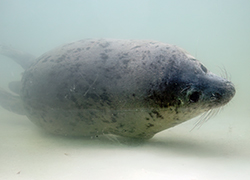
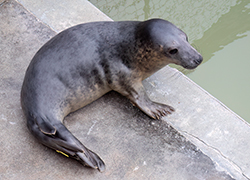
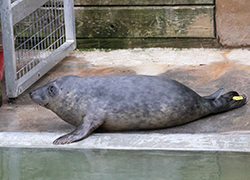
These rescued pups are in the outside pools for their next stage of rehabilitation which means they are on the road to recovery and ready to mix with other seal pups, as well have deeper pools to swim in.
The pups in the pools are learning how to behave in the wild, interacting with other seals and also competing for their fish, which are all vital skills seal pups will need when they are released back out into the wild.
In early February the weather conditions in Cornwall were perfect to release some of the seal pups who had been staying at the Sanctuary for the past few months.
Each rescued seal pup is weighed every week to find out who has reached the ideal target weight of 30+kg.
All the seal pups were at a good weight and fully recovered thanks to the care and expertise of the brilliant Animal Care Team. It is such an amazing feeling for the team to see them happily "galumphing" back home. Good luck little ones.
GPS-Tagged Seal Pup Spotted Thriving in the Wild after 600km Journey
A grey seal pup rehabilitated at the Cornish Seal Sanctuary has recently been spotted thriving in the wild two months after its release, showcasing incredible natural behaviours and resilience.
The rehabilitated pup was seen by James Savage and Peter Perkins, volunteers with the Seal Research Trust during a survey along the coast of Cornwall.
The pup named "JP" by a Sanctuary pup sponsor, was fitted with a GPS tracker as part of an exciting trial study run by the University of Exeter in cooperation with the Sanctuary, and has travelled over 600km since his release, including a brief visit to the Isles of Scilly. Click here to read more.
Photo Credit : Peter Perkins - Seal Research Trust
Pleeeeaaaasssseeeee Sponsor me and my friends while we stay temporarily for a few months at the Cornish Seal Sanctuary receiving excellent care by the lovely Animal Care Team.
We are getting stronger eating lots of fish and one of your favourite resident seals, Sheba, the oldest seal in the world at 50 years old, keeps giving us Pups a hard stare, as she thinks there are none left for her and her friends - this is me...giving them the look back! from the nursery pool. Please help the Sanctuary to look after us!
Did you know...After a few breaths at the surface - seals automatically start to sink!
When carbon dioxide builds up in their blood, a rear flipper reflex twitches bringing them back to the surface to breathe without waking up! Click here to see photos of the resident seals this month.
Did you know...These Puffins are pelagic seabirds that feed primarily by diving in the water. They breed in large colonies on coastal cliffs or offshore islands, nesting in crevices among rocks or in burrows in the soil.
Click here or on the image below to see a selection of the Puffins photos which were taken this month.
The Paddock Residents are Pygmy Goats, Valais Blacknose Wether Sheep and Greyface Dartmoor Sheep.
Click here or on the image below to see a selection of the photos of the Paddock Animals which were taken this month.
Calling all animal lovers your Valentine´s Gift Guide is here??
Did you plan the perfect Valentine´s surprise? This guide helped you seal the deal for that special someone. From adorable seal-themed gifts to Sanctuary experiences, we´ve got you covered, one flipper at a time??
PUPS AND PUFFINS - FEBRUARY HALF TERM - 15TH TO 23RD FEBRUARY 2025
Play, Learn and Discover at the Cornish Seal Sanctuary!
February half term adventures were filled with family fun, cute seal pups, and fascinating wildlife at the Cornish Seal Sanctuary in Gweek!
This year, we´re celebrating 50 years of rescuing, rehabilitating, and releasing seal pups at the Sanctuary in Gweek. Visit this February half term and help us continue our work for another 50 years! Click here to read more!
Changes to this Website
As you may have noticed, we, the Media Volunteers Team, have been amending the colour of the website from green to blue. We have changed all the everyday pages that you view, e.g. residents, information, etc., but all news updates, press releases, rescues, up to and including December 2024 will remain as green. We have thousands of pages to amend, and this would take us months and months, so we have decided to change only certain pages. The volunteers´ website has been established since 1997, but many of the older pages are used for reference purposes only.
Each released seal pup is given a flipper tag with an unique ID number. This helps the Cornish Seal Sanctuary and the Seal Research Trust (SRT) to track and monitor where pups end up and how they are doing once they are back in the wild.
This month the following seals were spotted in the wild by members of the public and volunteers of the SRT from around the coast of Cornwall and the Isles of Scilly:-
The information regarding tagged seals seen in the wild is copyright of the SRT.
By monitoring the behaviour of seals after release back into the wild, the Cornish Seal Sanctuary and the SRT can use this information to define the best practice standards and policies that they can share with the international rescue community.
Each seal´s fur pattern is unique and enables the SRT volunteers track them for life.
Seals face many challenges, yet we all depend on them to balance our marine ecosystem, which is essential to make the oxygen we breathe.
Seals are our globally rare wildlife tourist attraction, helping diversify coastal economic prosperity.