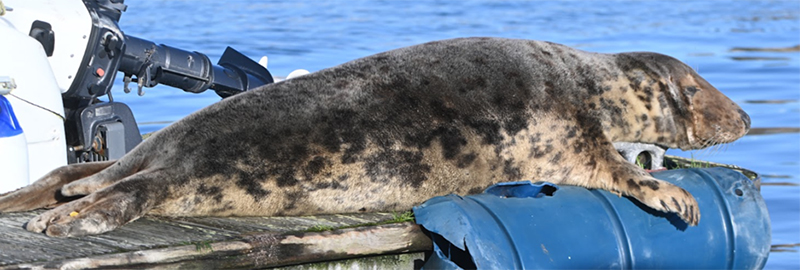
Pippi Longstocking was rescued on 17th December 2019
|
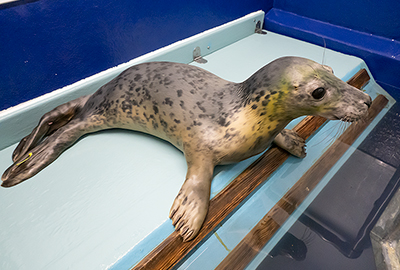
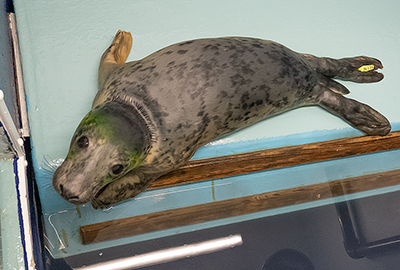
Pippi Longstocking, 8 weeks old female grey seal pup, was rescued on 17th December 2019 from Penberth Cove by the British Divers Marine Life Rescue (BDMLR) marine mammal medics volunteers. This pup was taken to one of BDMLR´s holding facilities until a hospital pen became available on 20th December 2019 at Gweek. She had a wound on the back of her head with various superficial wounds.
Update - 31st December 2019 : Pippi Longstocking is currently in the hospital and will be moved down to the nursery pools in the next week or so. She weighs 15kgs.
Flipper tag ID number is SL131 (yellow).
These photos above were taken on 28th December 2019 in the Sanctuary´s hospital, click here to see a larger versions of these images.
|
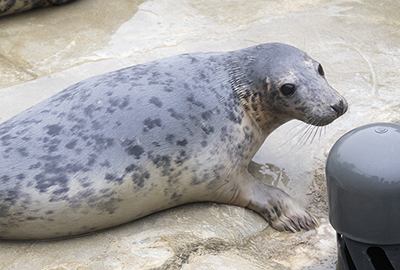
Update - 1st February 2020 : Pippi Longstocking is in the seal pups pool for her final stage of rehabilitation before she is released back into the wild in the next month or so. Currently weighs 27kgs.
This photo was taken on 31st January 2020, click here to see a larger version of this image and a further one.
|
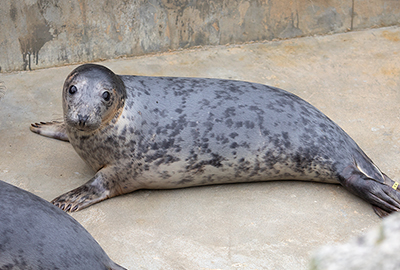
Update - 23rd February 2020 : Pippi Longstocking has completed her rehabilitation and is now ready to be returned to the wild shortly. Currently weighs 34kgs.
This photo below was taken on 21st February 2020, click here to see a larger version of this image.
|
|
Update - 6th March 2020 : Pippi Longstocking along with Alice in Wonderland, Elf, Horrid Henry, Lisbeth, Stig and Piglet have completed their rehabilitation and were released back into the wild on 2nd March 2020 at Dollar Cove.
|
Update - 4th January 2026 : Pippi Longstocking was spotted along the South coast of Devon on 11th July 2021, 31st August 2020, 29th May 2021, 1st & 7th November 2021, 12th February 2022, 19th November 2022, 29th December 2022, 5th December 2023, 11th January 2025,10th, 22nd & 23rd February 2025, 19th December 2025, 29th December 2025 and 4th January 2026.
Photo Credit : The Seal Project - 31st August 2020
|
By monitoring the behaviour of seals after release back into the wild, the Cornish Seal Sanctuary, The Seal Project, Seal Research Trust and other organisations can use this information to define the best practice standards and policies that they can share with the international rescue community.
Each seal´s fur pattern is unique and enables the organisations to track them for life.
Seals face many challenges, yet we all depend on them to balance our marine ecosystem, which is essential to make the oxygen we breathe.
Seals are our globally rare wildlife tourist attraction, helping diversify coastal economic prosperity.
|
|
|