|
The Cornish Seal Sanctuary not only relies on the public to spot injured or abandoned seals but also to help with the post monitoring release.
If you are out and about the Cornish coastline and you spot a seal, it may be a seal the Sanctuary has released in the past.
|
The Cornish Seal Sanctuary and the Seal Research Trust would like to know about any seals which are spotted with tags, they need to know it´s location (where you saw the seal), the colour of the tag (each rescue season they use a different colour tag, for example 2025/26 year, it was a yellow tag), the date you saw the seal and the behaviour of the seal.
Then please contact the Cornish Seal Sanctuary via email and the Seal Research Trust via email.
|
By monitoring the behaviour of seals after release back into the wild, the Cornish Seal Sanctuary, Seal Research Trust and other organisations can use this information to define the best practice standards and policies that they can share with the international rescue community.
Each seal´s fur pattern is unique and enables the organisations to track them for life.
Seals face many challenges, yet we all depend on them to balance our marine ecosystem, which is essential to make the oxygen we breathe.
Seals are our globally rare wildlife tourist attraction, helping diversify coastal economic prosperity.
|
Here is a rather lovely story of collaboration and success!
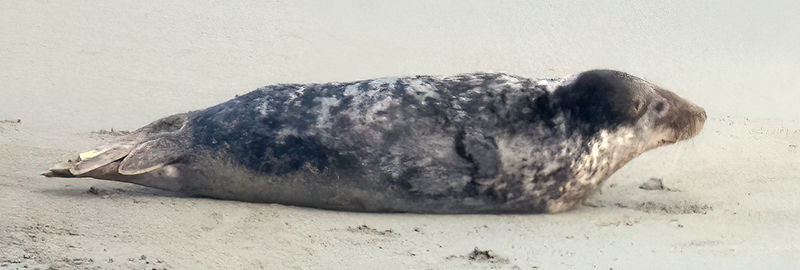
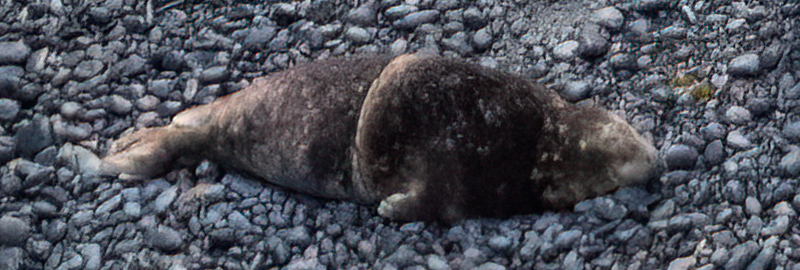
| On 11th February 2010, a grey seal pup entangled in monofilament net was rescued at Perranporth, Cornwall, by the British Divers Marine Life Rescue (BDMLR) volunteer marine mammal medics and taken for rehabilitation at the Cornish Seal Sanctuary. After recovering, Bagshot was released back to the Cornish wild again three months later.
Over the years the Seal Research Trust (SRT) volunteers, the Cornish Seal Sanctuary and the BDMLR have received multiple reports from seal survey colleagues on Skomer Island, south west Wales, who have repeatedly seen Bagshot there during the autumn - including once with a pup! SRT have been able to identify her both from her rear flipper tag ID number used by rehabilitation centres, as well as from her entanglement scars and fur patterns that can be used with photo-identification. From this we have seen that her old scars sometimes open up again, but then heal over once more.
BDMLR were delighted to hear that she was seen again very recently on 1st October 2023! At 14 years old now she is in the prime of her life and another demonstration of how successful rescue and rehabilitation is for these animals, as well as revealing a bit more about their lives. Bagshot is only ever identified in Skomer during Autumn, so where is she does she spend the rest of the year..?
BDMLR know from research including the members of the SRT that individual seals make their own individual seasonal journeys around the coast from south west England to Wales, Ireland, the Isle of Man and into the Bay of Biscay on a regular basis. They never stay in one place all year round and are incredibly mobile with animals known to travel from Dorset to North Cornwall in just three days. How fab would it be to find out when and where else in the world Bagshot goes?!
| Photos Credits: Rehab at the Cornish Seal Sanctuary (2010), Lisa Morgan (2014) and Bee Buche (2023)
|
|